


It’s your choice who repairs your vehicle
Home truths about accident repair
When it comes to renewing or picking your car insurance, understanding and deciphering the various policies can feel like a minefield but what happens when it comes to making a claim? What are your rights with regards to repairing your vehicle following an accident? Motor Claims Guru, Tim Kelly and Castle Coachworks’ Finance Director, Rita Robins share some need to knows about accident repair.
First things first, let’s get back to basics. What types of car insurance are available?
There are three main kinds of car insurance policy; Third Party, Third Party Fire and Theft, and Comprenhensive insurance.
- A Third-Party policy provides the least amount of cover. It protects you against damage that’s caused by you or one of your passengers to other road users; both to their vehicles and any accidental damage that is caused to any property. In the event of an accident, this means your insurance will not cover any damage repairs for your own vehicle. Any bills are down to you to settle.
- Third-Party, Fire and Theft cover is the second option. It includes everything in third-party cover, but in addition, also pays out in event that your vehicle is stolen or damaged, or destroyed by fire.
- The highest and widest level of protection is Comprehensive car insurance. In addition to the third party cover, Comprehensive insurance includes damage to your own vehicle. Many policies also cover driving other cars up to third party level, driving a hire car and also abroad for a designated length of time.
What is excess?
Although it can sometimes appear confusing, in simple terms, the excess is the sum of money you payout in the event of making a claim. (The first part of any claim, in general, this is only applicable to your vehicle) For example, you have a claim worth £600 and your excess is £200, you will pay this excess and the provider will foot the remaining £400.
Most insurance providers have two types of excess. A compulsory excess, a fixed sum determined by them, and a voluntary excess, a sum which you can set at your own discretion. The more you’re willing to contribute through this voluntary excess can help drive down your premium resulting in lower monthly or yearly fees for the policy. Though this is not always the case, so it is a good idea to play with increasing and decreasing it to see how much it affects the premium. A word to the wise, this can also mean that claiming on your policy could prove very costly.
Depending on your car insurance option, your excess sum will usually be refunded if you’re found to not be at fault but this excess is generally paid upfront to get a claim started. Another factor to take into consideration when considering your voluntary excess sum when you are initially setting up your policy.
Making a claim on your policy.
Policy decided and paid for, when it comes to making a claim there are often some grey areas when it comes to accident repair. Finance Director, Rita Robins explains.
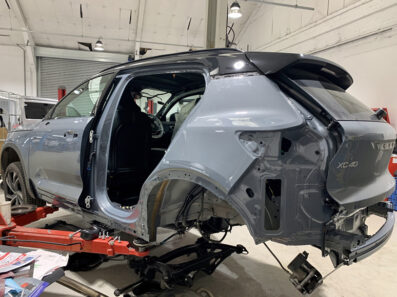
“In the event of an accident, most insurance companies will want to direct you to their own approved body shop to assess the damage and viability of any repairs. They might even try to charge you double your excess for not using their approved repairer so it is always advisable to check your policy. Whilst this can act as a deterrent, it is important to understand both your rights and their reasoning.
By sending you to their own repairer, the insurance company can control the costs which they will invariably try to keep as low as possible. This could mean that your car is written off rather than being repaired or is sent to a body shop that uses second-hand parts or will not return it to manufacturer standards. Ultimately, they will be looking for the cheapest payout.”
What are my rights with regards to accident repair work?
We asked the expert Tim Kelly, Motor Claim Guru for his insider’s knowledge.
“In reality, it is your legal choice who repairs your vehicle”, explains Kelly. “You have the right to take it wherever you want to for both an initial damage assessment and for the repair work. The customer’s entitlement to choose who repairs their vehicle is covered under the following acts and laws:
The Consumer Rights Directive 1993, where the Office of fair trade, the A.B.I., and what was the Financial Service Authority now the FCA, agreed in favour of the consumer’s right of choice.
This has since been covered in:
- The Consumer rights act 2015.
- The Consumer Protection for Unfair Trading Act 2008
- Application part 8 of the Enterprise Act for Unfair Trading Regulations 2008
- Motor Vehicle Block Exemption Regulations EC1400/2002
- Competition Act 1998.
The 2015 Insurance Act also stipulates that prior to a contract occurring, the insurer has to make the customer aware that the contractor fulfills the demands and needs of the consumer. Any adverse terms or conditions have to be brought to the attention of the consumer. These should have no material detriment to the consumer. To advise after the contract has occurred that a term is in place which restricts the consumer’s choice, or advise that you seek to reduce your contractual liabilities is therefore in direct breach of this act.
Insurers are also bound by the Financial Service and Markets Act 2000 and must follow the rules set by the Financial Conduct Authority. One specific rule you should always be mindful of as a consumer is the ICOBS 2.5.1; ‘The customers best interest rule’
- ICOBS 2.5.-1R 01/10/2018 : A firm must act honestly, fairly and professionally in accordance with the best interests of its customer.[Note: article 17(1) of the IDD]
When making a claim on your insurance, your provider may try and inform you that you have ‘subrogated’ your rights to them, and they will choose how the claim is handled. This is not necessarily the case. They cannot deny you your lawful entitlements. No matter what an insurer advises you, by law, they have to put your ‘demands and needs’ over and above their own.” Thanks for the reassurance Tim Kelly.
Trust Castle to take care of you.
“Before you contact your insurance company, speak to us first. We can try and ensure you get the result you are looking for. As manufacturer-approved repairers, not only do we uphold brand repair standards in terms of quality and safety but also benefit from the total loss avoidance scheme. This scheme gives us a discount on Genuine Parts which could help your car get back on the road rather than being written off. Our safe repair standards and lifetime repair work guarantee also mean we will make sure your vehicle will perform as reliably for you again in the event of another accident. You can trust Castle Coachworks to take care of you and your family,” concludes Robins.
Want to learn more? Head over to our FAQs page or call us on 01604 580582 for a free repair estimate.
Have a question for the Motor Claim Guru? Have a good read of their website first: www.motorclaimguru.co.uk and if after reading you have a question, click to contact.